
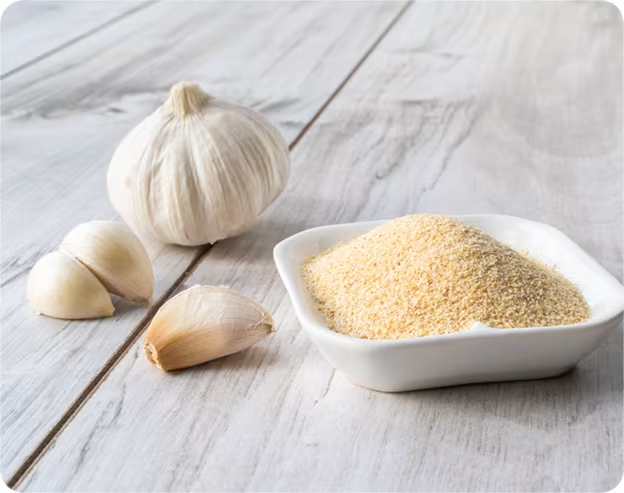
Dehydrated and freeze-dried vegetables both extend shelf life and reduce weight, but they differ in cost, quality, and typical applications. For most B2B buyers sourcing at scale, dehydrated vegetables from India offer the best value. This guide compares both so you can choose the right option for your product and budget, and how to source export-ready product. For US import rules, see the FDA guide to importing food.
Dehydrated Vegetables: Cost-Effective at Scale
Dehydration (e.g. hot-air or belt drying) removes most of the moisture from vegetables, giving you a stable powder or piece with 12–24 months shelf life. Production costs are lower than freeze-drying, so dehydrated onion, garlic, tomato, and ginger are affordable for high-volume applications: soups, seasonings, snacks, sauces, and ready meals. India is a leading producer with FSSAI and ISO certified facilities. Onion powder and garlic powder are among the most commonly exported.
How Dehydration Works
In hot-air or belt drying, prepared vegetables are exposed to controlled heat and airflow until moisture is reduced to typically under 6% for powders. The result is a stable product that can be milled to various mesh sizes. Dehydrated vegetables retain flavour and colour well for use in dry mixes, seasonings, and reconstituted products. The process is energy-efficient and scalable, which is why India and other producing countries can supply large volumes at competitive prices.
Many food manufacturers run the numbers and find that dehydrated ingredients reduce total cost per kilo when you factor in waste, labour, and storage. There is no cold chain. No peel loss. No seasonal spike. You get the same flavour profile batch after batch from a single certified supplier. That predictability matters for branded products and for export where documentation and consistency are non-negotiable.
Freeze-Dried: Premium Quality, Higher Cost
Freeze-drying preserves colour, shape, and often a bit more flavour and nutrition than conventional dehydration. It is ideal for premium products where appearance and rehydration matter (for example camping food, premium ready meals, or ingredients where you want pieces to look like fresh). The process is more expensive, so freeze-dried is typically used where the premium is justified.
When Freeze-Dried Makes Sense
If your product is positioned as premium or you need pieces that rehydrate quickly and look like fresh vegetables, freeze-dried may be the right choice. For most industrial applications, soups, seasonings, snack coatings, and sauces, dehydrated powder or flakes deliver the flavour and functionality at a fraction of the cost. Many food manufacturers use dehydrated for their core lines and reserve freeze-dried for specific premium SKUs.
Camping and outdoor meal brands often use freeze-dried vegetables because consumers add boiling water and expect the pieces to look and taste like fresh. Premium soup cups and ready meals sometimes combine both: dehydrated powder for base flavour and freeze-dried pieces for visual appeal. If your brand is value-focused or you supply industrial customers who care more about flavour and cost than piece identity, dehydrated is usually the better fit.
Cost and Shelf Life: A Quick Comparison
Dehydrated vegetables typically cost less per kilogram than freeze-dried. Shelf life for both is long when stored in a cool, dry place. Dehydrated powders and flakes often achieve 12 to 24 months. Freeze-dried products can match or exceed that. The main difference is unit cost and how the product behaves in your application. If you need powder that disperses in a dry mix or a sauce, dehydrated is the standard. If you need pieces that rehydrate to look like fresh vegetables, freeze-dried is the option.
When to Choose Which
Choose dehydrated when you need consistent flavour and colour in a powder or small piece, at the best price, for applications like seasonings, soups, and snacks. Choose freeze-dried when you need superior rehydration, piece identity, or a premium positioning and can absorb the higher cost. For most food manufacturers and exporters, dehydrated from India is the default. Request a quote from Geminate International. We export to 25+ countries.
Specifications for Dehydrated Export
When sourcing dehydrated vegetables for export, specify product form (powder, flakes, granules), mesh size for powders (e.g. 40–80), moisture content (under 6% for powders), and origin if you have a preference. Request a Certificate of Analysis and sample before scaling up. FSSAI and ISO 22000 certification from your supplier ensures food safety and traceability. View our certifications and browse our product range.
Mesh Size and Moisture: Why They Matter
Mesh size determines how the powder behaves in your product. Finer mesh (e.g. 80–100) disperses quickly in liquids and dry mixes. Coarser mesh (e.g. 40–60) can add a slight texture. For most applications in soups, seasonings, and sauces, 40 to 80 mesh works well. Moisture should be under 6% for powders to avoid caking and to protect shelf life. Your supplier should provide a COA that states both. If you are supplying multiple applications you may need different specs. Discuss your end uses with the supplier so they can recommend the right form and mesh.
Storage and Handling
Both dehydrated and freeze-dried products must be kept dry. Moisture is the enemy of shelf life. Store in a cool, dry warehouse in sealed bags. Once opened, use the product within a reasonable time or reseal properly. Your supplier should ship in moisture-resistant packaging (e.g. 25 kg HDPE bags) suitable for sea or air freight. Confirm packaging and palletisation when you order so your warehouse can plan receiving and storage.
How to Order and What to Ask For
Tell your supplier the product (onion, garlic, tomato, ginger, or other), the form (powder or flakes), mesh size if applicable, and your target quantity. Ask for a sample and a Certificate of Analysis so you can verify quality before committing to a full container. A reliable exporter will confirm lead time, MOQ, and documentation. At Geminate International we quote quickly and ship with full export documentation to 25+ countries. Request a sample or contact us for a quote.
Lead Time and Documentation
From order to shipment allow roughly 2 to 4 weeks for production and packing. Sea freight adds several weeks depending on destination. Your supplier should provide Commercial Invoice, Packing List, Bill of Lading, and Certificate of Analysis with every shipment. For some markets you may need Phytosanitary Certificate or Certificate of Origin. Confirm documentation requirements with your customs broker and your supplier before you order. We export to the USA, UK, UAE, Australia, and 25+ other countries with complete paperwork every time.
Applications at a Glance
Dehydrated powder and flakes are the default for dry soup mixes, instant noodle seasonings, snack coatings, sauce bases, and ready meals. They give consistent flavour, long shelf life, and easy handling. Freeze-dried pieces are used where visual appeal and quick rehydration matter, such as premium soup cups, camping meals, and products that promise "real vegetable pieces." If you are unsure which type fits your product, request samples of both from your supplier and test them in your application. Many buyers start with dehydrated for cost and scale and only add freeze-dried for specific SKUs where the premium is justified.
India is one of the world's largest producers of dehydrated onion, garlic, tomato, and ginger. FSSAI and ISO 22000 certified facilities supply food manufacturers and distributors in the USA, UK, UAE, Australia, and beyond. When you source from an export-ready Indian supplier you get the same documentation and traceability you would expect from a domestic supplier, with the added benefit of competitive pricing and scale. Tomato powder and ginger are also widely exported from India in both dehydrated and, where demand exists, freeze-dried form.
Before you place a large order, request a sample and a Certificate of Analysis. Test the sample in your product or process to confirm flavour, colour, and particle size. Once you are satisfied, agree on specs (form, mesh, moisture), packaging, and documentation with your supplier. A reliable exporter will confirm lead time and MOQ and will provide Commercial Invoice, Packing List, Bill of Lading, and COA with every shipment. We have been supplying dehydrated vegetables to 25+ countries for years and get the paperwork right the first time.
Summary
Dehydrated vegetables are the workhorse for most B2B and export applications. They are cost-effective, consistent, and widely available from India. Freeze-dried is the premium option where rehydration and appearance justify the cost. Specify your requirements, request a sample and COA, and work with an export-ready supplier. Contact us for a quote on dehydrated onion, garlic, tomato, or ginger. We respond within 24 hours.
Whether you choose dehydrated or freeze-dried, work with a supplier that holds FSSAI and ISO 22000 certification and can provide full documentation. That way your shipment clears customs without delay and your quality team has the paperwork they need for audits and traceability. Why choose us and about us give you more on our quality and process. We export dehydrated vegetables to 25+ countries and respond within 24 hours to quote and sample requests. For bulk dehydrated vegetables from India, request a quote or a sample today. We ship to the USA, UK, UAE, Australia, and 25+ other countries with complete documentation every time.