
Sourcing bulk dried vegetables from India for the first time can feel overwhelming: which specs matter, which certifications to check, and how to place an order without risk? This buyer’s guide gives you everything B2B buyers need—specs, certifications, MOQ, packaging, and how to place your first order with an export-ready Indian supplier—so you can source with confidence.
India is one of the world’s largest producers and exporters of dehydrated onion, garlic, tomato, and ginger. Export-ready suppliers work with food manufacturers and distributors in the USA, UK, UAE, Australia, and beyond. Following the steps in this guide will help you choose a partner that meets your quality and compliance requirements and delivers on time with full documentation.
What to Specify: Specs That Matter for Dehydrated Vegetables
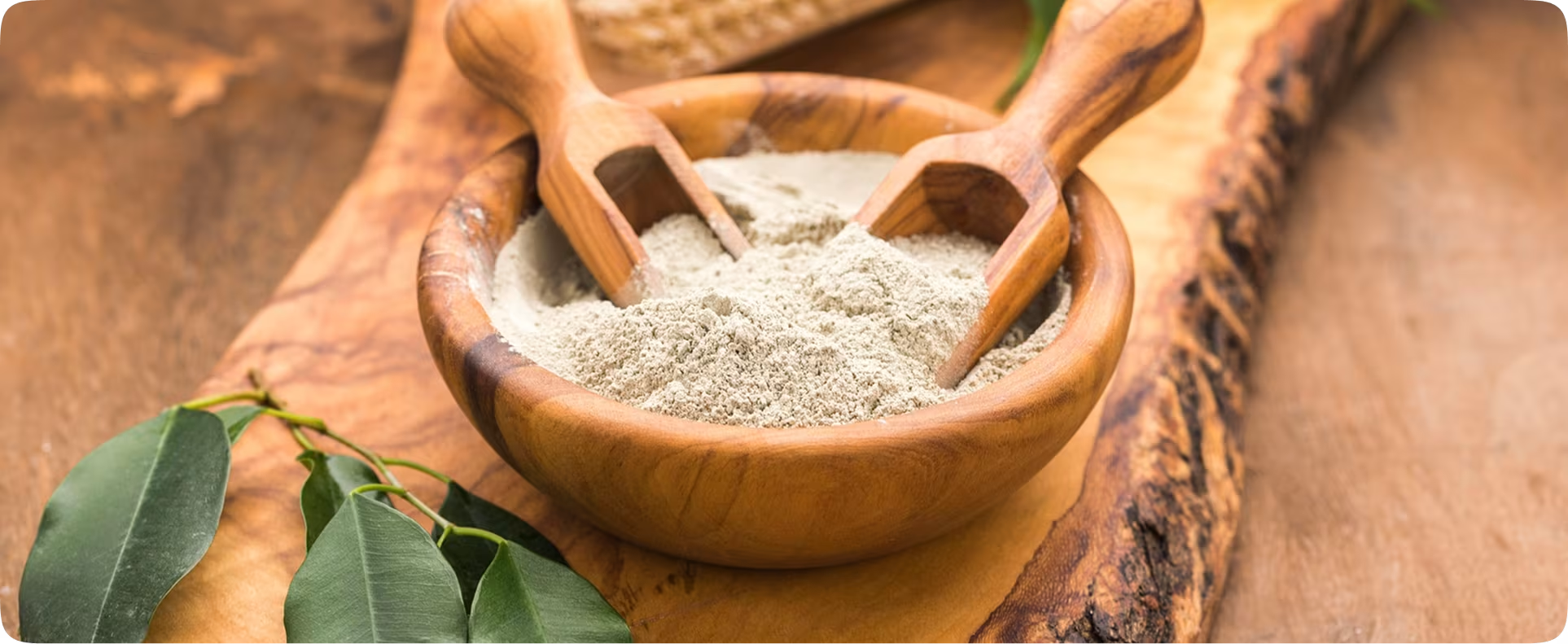
Define the product clearly: for example onion powder, garlic powder, tomato powder, or ginger powder. Then specify particle size (mesh size for powders—40 to 80 is common for onion and garlic), moisture content (typically under 6% for powders to ensure shelf life and flow), and origin if you have a preference (e.g. Gujarat onion for a particular flavour profile). Clear specs help the supplier quote accurately and deliver what you need. Onion, garlic, tomato, and ginger are the most commonly sourced dried vegetables from India.
Mesh Size and Moisture: Why They Matter
Mesh size affects how the powder behaves in your application—sauces, seasonings, dry mixes, or instant noodles. Finer mesh (e.g. 80–100) disperses quickly. Coarser (e.g. 40–60) can add a slight texture. Moisture above 6% can lead to caking and shorter shelf life, so insist on a COA that confirms moisture. Reputable Indian exporters like Geminate International supply to 25+ countries with consistent specs and provide a Certificate of Analysis with every shipment.
If you are supplying multiple applications—for example both a dry soup mix and a wet sauce—you may need different mesh sizes or even different forms (powder vs flakes). Discuss your end uses with the supplier so they can recommend the right spec. Many buyers start with one or two products and expand once they see the quality and reliability of the partner.
Certifications to Verify Before You Order
FSSAI, ISO 22000, and APEDA registration are the baseline for any export-ready Indian supplier. FSSAI is India’s food safety registration (mandatory for food businesses). ISO 22000 is an internationally recognised food safety management system. APEDA (Agricultural and Processed Food Products Export Development Authority) registration covers export eligibility for agri products from India. For official information on food safety standards in India, see FSSAI. Request current certificates and, if possible, recent lab reports. View our certifications to see what proper documentation looks like.
Why These Three Certifications Matter for International Buyers
Buyers in the USA, UK, UAE, Australia, and Europe typically require proof of FSSAI and ISO 22000 before they consider a supplier. APEDA registration confirms that the exporter is authorised to ship agri products from India. Without these, you may face customs delays or rejection. We maintain all three and undergo regular audits so our documentation is always up to date.
Some buyers also ask for Halal, Kosher, or organic certifications. If you need these, raise them at the quote stage so the supplier can confirm availability and any premium. Not every product or batch is certified for every standard, so clarity upfront avoids surprises.
When you receive certificates, check the validity dates and the scope (product categories, facility). Certificates that are expired or that do not cover the product you are buying are not useful for your audits or for customs. A serious exporter will renew certifications on time and will share updated copies as soon as they are available.
MOQ and Packaging: What to Expect
Typical minimum order quantity (MOQ) is 500 kg to 1 MT per product in 25 kg moisture-resistant bags. Custom or private label packaging may have higher MOQs. Discuss your volume and packaging needs with the supplier so they can confirm MOQ and price. Samples are usually available for testing before you commit to a full order—always request a sample and test it in your application before scaling up.
Packaging affects both cost and logistics. Standard 25 kg HDPE bags are easy to handle and stack. They are also suitable for many export destinations. If you need smaller retail-ready packs or branded bags, the supplier can often arrange it with a higher MOQ. Lead times for custom packaging are typically longer, so plan accordingly. Always confirm whether the quoted price includes packaging and whether palletisation or container loading is included—these details affect total landed cost and ease of handling at your warehouse.
How to Place Your First Order: Step by Step
Step 1: Share the product, quantity, and packaging you need. Step 2: Request a formal quote and a sample. Step 3: Test the sample in your application (sauce, seasoning, soup mix, etc.). Step 4: If the sample meets your specs, place the order and confirm the documentation you will receive: Commercial Invoice, Packing List, Bill of Lading, Certificate of Analysis, and any certificates required for your country (e.g. Phytosanitary, Certificate of Origin). Step 5: Keep records of the COA and shipment details for traceability and compliance. Request a sample or contact us for a quote. We ship to 25+ countries and provide complete documentation with every shipment.
Payment terms vary: some suppliers ask for advance or LC. Others offer open account for established buyers. Discuss terms with your supplier. For first-time orders, expect to pay a deposit or full amount before shipment until credit is established. A reliable exporter will be clear about payment methods and will not change terms unexpectedly. At Geminate International we work with buyers to find terms that suit both sides while protecting quality and delivery.
Lead Time and Logistics: Planning Your Supply Chain
From order confirmation to shipment, allow roughly 2–4 weeks for production and packing, depending on quantity and product. Sea freight from India to major ports (USA, Europe, UAE, etc.) typically adds 3–6 weeks. So total lead time from order to delivery is often 6–10 weeks. If you need faster delivery, ask about air freight for part or all of the order. It is more expensive but useful for samples or urgent replenishment.
Your supplier should provide vessel details and tracking so you can plan inventory and inform your warehouse. They should also prepare all export documentation so your customs broker or forwarder can clear the shipment without delay. At Geminate International we have shipped to 25+ countries and work with buyers’ preferred logistics partners when needed. We know that predictable lead times and clear communication are as important as the product itself.
Red Flags: When to Walk Away from a Supplier
Be cautious if a supplier cannot provide current FSSAI, ISO 22000, or APEDA certificates. If they are reluctant to send a sample or a COA. Or if their documentation is inconsistent or vague. Reliable exporters are transparent about their certifications, specs, and processes. At Geminate International we have built long-term relationships with buyers worldwide because we deliver consistent quality and full documentation every time. Why choose us and about us give you more on our quality and process.
Other red flags include: quotes that are far below market without a clear explanation, refusal to put specs in writing, or pressure to skip the sample step. A good partner wants you to verify quality before you commit. They will also answer detailed questions about origin, testing, and traceability—because they have nothing to hide.
What Successful Buyers Do Differently
Buyers who get the best results from Indian suppliers tend to do a few things consistently: they specify requirements clearly in writing (product, mesh, moisture, packaging), they always request and test a sample before a large order, they verify certifications and COA before shipment, and they treat the first order as a trial run—small enough to manage risk but large enough to test logistics and quality in real conditions. Once the first order lands successfully, they scale up and often consolidate more products with the same supplier. Building a long-term relationship with one or two reliable exporters reduces variability and simplifies compliance. We have many customers who started with a single product and now source multiple dehydrated vegetables and spices from us for exactly these reasons.
Summary: Your Checklist for Sourcing Bulk Dried Vegetables from India
Specify product, mesh, moisture, and origin. Verify FSSAI, ISO 22000, and APEDA. Agree on MOQ and packaging. Request a sample and COA, test the sample, then place your order and ensure you receive full documentation. Keep your broker and warehouse informed of lead times and vessel details so they can plan for arrival. After your first successful order, consider consolidating more products with the same supplier to simplify logistics and build a long-term relationship. If you are unsure about any step, ask your supplier: a good exporter will guide you through the process so your first order becomes the first of many. View our product range and request a quote for bulk dried vegetables from India. We respond within 24 hours.