
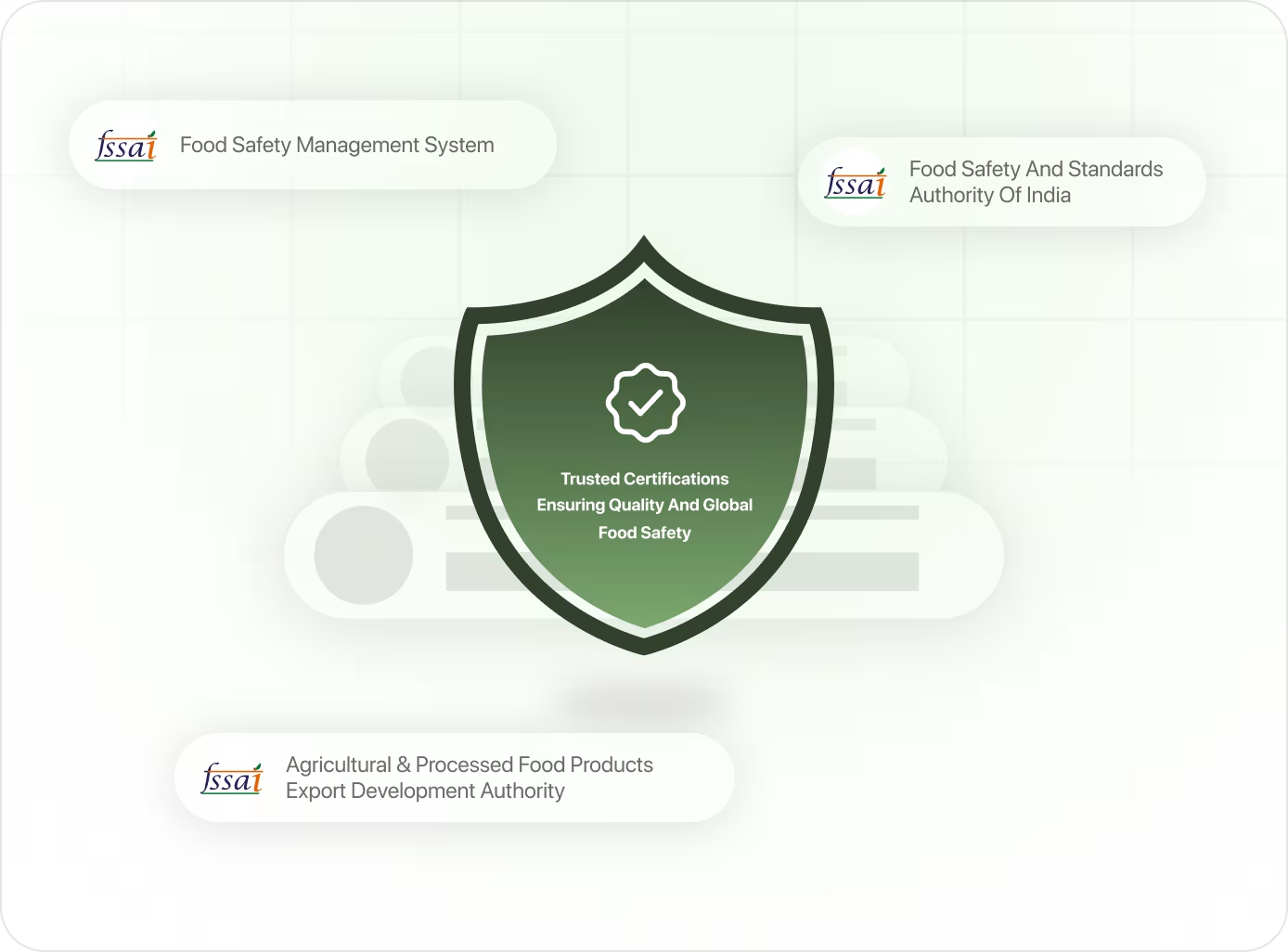
If you are importing spices or dehydrated vegetables from India, you need to make sure your supplier meets international food safety standards. FSSAI and ISO 22000 are the two certifications that matter most, and understanding what they mean can save you from costly compliance problems down the line. This guide explains what FSSAI and ISO 22000 cover, why APEDA matters for export, and how to verify your supplier before you buy. For official information, see FSSAI.
What FSSAI Actually Covers
FSSAI is India's food safety authority. Every food manufacturer, processor, and exporter in India is required to be registered with FSSAI. It covers hygiene practices, labelling standards, and quality controls. If you are buying turmeric, black pepper, cumin, chilli, or onion powder, your supplier's FSSAI registration tells you they are operating within India's food safety framework and that there is a paper trail if something goes wrong. The registration is not optional. Without it the business cannot legally manufacture or export food from India. When you request certificates, check the validity date and the scope. The scope should cover the products you are buying and the facility that produces them.
Why Buyers in the EU, US, and Middle East Care
Importers in regulated markets are often required to prove that their suppliers meet certain standards. FSSAI registration is one of the first things a customs authority or a customer may ask for when you source from India. It shows that the supplier is part of the official food safety system and can be held accountable. Keep a copy of your supplier's FSSAI certificate on file. You may need to submit it with your customs documentation or to your own customers during an audit. View our certifications to see what proper documentation looks like.
What ISO 22000 and HACCP Add
ISO 22000 and HACCP go beyond basic registration. They mean the supplier has a documented food safety management system that covers everything from raw material sourcing to final shipment. Buyers in Europe, the US, and the Middle East usually require proof of ISO 22000 and HACCP before they will approve an Indian supplier. Ask for the current certificate and, if possible, a recent audit summary. ISO 22000 is an international standard. It is recognised globally and shows that the supplier has implemented a systematic approach to food safety. HACCP (Hazard Analysis and Critical Control Points) is often part of the same system. Together with FSSAI, these certifications give you confidence that the supplier is not only registered but also operating under a managed, audited system. When you qualify a new supplier, request all three and verify that the certificates are current and cover the products you intend to buy.
Do Not Forget APEDA
APEDA registration is required for most agricultural and processed food exports from India. It supports export documentation and shows that the supplier is set up for legitimate international trade. Together with FSSAI and ISO 22000, APEDA registration rounds out the picture of a serious, export-ready supplier of dehydrated vegetables and spices. APEDA covers specified products including spices, fruits and vegetables (fresh and processed), and other agri products. An APEDA-registered exporter can obtain the certificates and clearances needed for export. If your supplier is not APEDA registered and you are buying a covered product, they may not be able to export to you legally. Ask for proof of APEDA registration when you qualify a supplier. We are FSSAI, ISO 22000 certified, and APEDA registered. We export to 25+ countries with full documentation every time.
How to Verify Before You Buy
Ask for current certificates for FSSAI, ISO 22000, and APEDA. Request lab test reports for moisture and purity. If a supplier hesitates to share any of this, move on. Check out our certifications and talk to us if you need a quote or want a sample. We are FSSAI and ISO 22000 certified and export to over 25 countries. Every shipment we send includes Commercial Invoice, Packing List, Bill of Lading, and Certificate of Analysis. We can provide current FSSAI, ISO 22000, and APEDA certificates when you place an order. Verifying certifications before you buy protects you from compliance issues and from working with suppliers who are not set up for export. Take the time to request and review the documents. A reliable exporter will provide them without delay. Request a sample or view our products. We respond within 24 hours.
What Each Certificate Tells You
FSSAI registration confirms the facility is registered with India's food safety authority and is subject to inspection. The certificate will show the registration number, the name and address of the business, and the products or categories covered. ISO 22000 shows that the supplier has implemented a food safety management system that is audited by an accredited body. The certificate will have a validity date and scope. APEDA registration confirms the exporter is authorised to export specified agricultural products from India. Without APEDA, the supplier may not be able to obtain export certificates or clear shipments. When you receive these documents, check that they are current and that the scope covers the products you are buying. Our certifications are kept up to date. Export documentation outlines what we include with every shipment.
Spices and dehydrated vegetables from India are exported to the USA, UK, UAE, Australia, and many other markets. Buyers in these markets expect FSSAI, ISO 22000, and APEDA as the baseline. Some buyers also require Halal, Kosher, or organic certifications. If you need these, ask at the quote stage. At Geminate International we supply onion powder, garlic powder, turmeric, and other products to 25+ countries with full documentation. Why choose us for reliability. For spices and dehydrated vegetables export from India with FSSAI and ISO certification, contact us for a quote. We respond within 24 hours.
Audit and Traceability
When your customer or an authority audits your supply chain, they will ask for proof that your Indian supplier operates under FSSAI and ISO 22000 and can trace product by batch. Request batch-wise COA and confirm that your supplier retains production and testing records. Traceability from raw material to shipment supports recalls and quality investigations. At Geminate International we maintain full traceability and provide COA with every shipment. Export documentation outlines what we include. For spices and dehydrated vegetables from India with proper certification, get in touch today.
Red Flags When Evaluating Suppliers
Suppliers that cannot provide current FSSAI, ISO 22000, or APEDA certificates are a risk. Expired certificates or certificates that do not cover the product or facility you are buying from are not useful for your compliance. Be wary of suppliers who are vague about traceability or who cannot provide a Certificate of Analysis for the batch they are shipping. A reliable exporter will have batch-wise records and will provide COA with every shipment. At Geminate International we maintain full traceability and provide all standard export documentation. About us and contact us for a quote. For spices and dehydrated vegetables from India with proper FSSAI and ISO certification, get in touch today.
Keeping Certificates on File
Importers in regulated markets should keep current FSSAI, ISO 22000, and APEDA certificates on file. You may need to submit them with customs documentation or to your customers during an audit. When certificates are renewed, request updated copies from your supplier and replace the old ones. At Geminate International we notify key customers when renewals are complete and can provide current certificates when you place an order. View our certifications. For spices and dehydrated vegetables from India with FSSAI and ISO certification, contact us for a quote. We respond within 24 hours.
Ordering and Documentation for Spices Export
When you place an order, confirm the product (e.g. turmeric, onion powder, garlic powder), quantity, mesh and moisture where applicable, and packaging. Your supplier will confirm lead time, MOQ, and the documentation that will accompany the shipment. Every consignment should include Commercial Invoice, Packing List, Bill of Lading, and Certificate of Analysis. For some markets Phytosanitary Certificate or Certificate of Origin is required. At Geminate International we supply spices and dehydrated vegetables to 25+ countries with full documentation every time. Contact us for a quote. We respond within 24 hours.
Red Flags When Evaluating Spice Suppliers
Suppliers that cannot provide current FSSAI, ISO 22000, or APEDA certificates are a risk. Expired certificates or certificates that do not cover the product you are buying are not useful for your compliance. Be wary of suppliers who are vague about traceability or who cannot provide a Certificate of Analysis for the batch they ship. At Geminate International we maintain full traceability and provide COA with every shipment. View our certifications and contact us. We respond within 24 hours.
Lead Time and Shipping for Spices
From order to shipment allow roughly 2 to 4 weeks for production and packing. Sea freight adds several weeks depending on destination. Your supplier should confirm lead time when you request a quote. Every consignment should include Commercial Invoice, Packing List, Bill of Lading, and Certificate of Analysis. At Geminate International we supply spices and dehydrated vegetables to 25+ countries with full documentation every time. Contact us for a quote. We respond within 24 hours.