
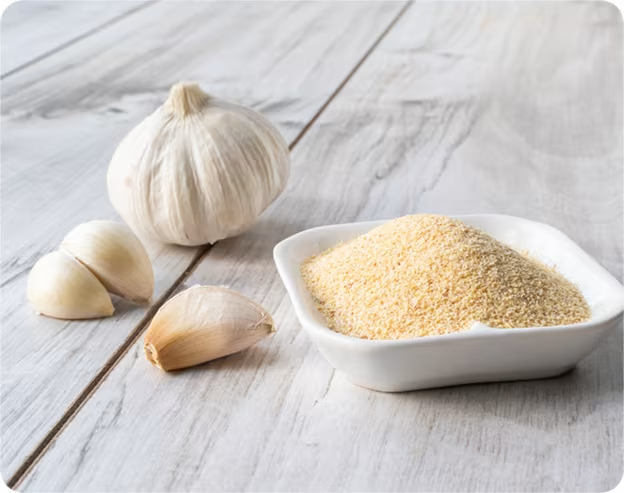
If you manufacture food products, you have probably debated whether to use fresh onions or switch to dehydrated onion powder. Both have their place, but the right choice depends on your product, your production setup, and your supply chain. This guide compares onion powder vs fresh onion for food manufacturing so you can decide what is right for your line and how to source reliable bulk onion powder from India. For food safety standards for Indian exports, see FSSAI.
Where Onion Powder Wins
Dehydrated onion powder gives you consistent flavour every single batch. It lasts 12 to 18 months on the shelf, it does not need refrigeration, and it is incredibly easy to handle on a production line. If you make dry mixes, seasonings, snack coatings, or soup bases, onion powder is almost always the better option. A good 40 to 80 mesh powder disperses evenly without clumping. Gujarat-sourced onion powder is known for its strong aroma and moisture levels under 6 percent, which means better flow and longer shelf life. You open the bag, dose into the mix, and move on. There is no peeling, no cutting, no cold chain, and no seasonal spike in cost or availability.
Many food manufacturers have run the numbers and found that when you factor in peel loss, labour, refrigeration, and waste, dehydrated onion improves margin and simplifies procurement. It also reduces variability. Fresh onion changes by season and region. With onion powder from a single supplier and spec you get the same flavour and colour every time. That is critical for branded products where consumers expect consistency. Dehydrated onion in powder and flake form is the default for soups, seasonings, sauces, and ready meals in most markets. Request a quote for bulk onion powder from India.
Where Fresh Onions Still Make Sense
Fresh onions work better when you need that crunch and high moisture content, like in fresh salsas, refrigerated dips, or products where the raw onion texture is part of the appeal. But for most industrial and export applications, the logistics of fresh onions, the waste, the inconsistency in flavour between seasons, and the cold chain requirements make onion powder a far more practical choice. If you supply a chilled ready meal or a fresh-positioned product with a short shelf life, fresh onion may be part of your formulation. For the majority of dry and ambient products, onion powder is the standard. It also reduces labour and waste in the factory. There is no peeling, cutting, or disposal of skins and trimmings. On a high-speed line that can mean fewer people and less downtime.
Cost and Waste: The Real Comparison
At first glance fresh onion can look cheaper per kilogram. Once you factor in peel loss (typically 10 to 15%), trim waste, labour for peeling and cutting, refrigeration, and shorter shelf life leading to write-offs, the total cost of fresh often exceeds dehydrated. Dehydrated onion is ready to use. You dose the powder or flakes directly into the mix. Automated systems can meter powder accurately. That helps with portion control and cost control. Many of our B2B buyers have switched from fresh to dehydrated onion and tell us they got a cleaner operation and better cost per kilo in the final product. Garlic powder and tomato powder offer the same benefits for sauces and seasonings.
Specifications When Ordering Onion Powder
When you order dehydrated onion powder, specify product form (powder or flakes), mesh size (40 to 80 for powder), moisture (under 6%), and origin if you have a preference (e.g. Gujarat onion). Request a Certificate of Analysis and a sample before scaling up. Your supplier should confirm lead time and MOQ. At Geminate International we supply FSSAI and ISO 22000 certified onion powder with full documentation to food manufacturers worldwide. We ship to 25+ countries. See our certifications and request a sample.
Finding Good Onion Powder
Look for suppliers with FSSAI and ISO 22000 certification. Make sure you specify your mesh size, target moisture content, and preferred origin. Bulk orders of 1 MT or more from India typically give you the best pricing. India is one of the largest producers of dehydrated onion globally. Gujarat and Maharashtra supply most of the crop. FSSAI and ISO certified facilities process it to strict specs. When you source from India you get competitive pricing, consistent quality, and full documentation for export. Browse our full range of onion products or ask us for a quote. We respond within 24 hours.
Mesh and Moisture: Why They Matter
Powder mesh (40 to 80 is common) decides how the onion disperses in your product. Finer mesh blends in quickly in liquids and dry mixes. Coarser can add a bit of texture. Moisture should be under 6% for powders. Higher moisture leads to caking and shorter shelf life. Your supplier should give you a COA that states moisture and mesh. Ask for it before you scale up. If you run both dry mixes and wet sauces you may need two specs. Talk to your supplier about your end uses. They can suggest the right form and mesh. Many buyers start with one product and one spec. Once they see the quality they add more SKUs. View our products for onion powder and other dehydrated vegetables.
Labour and Storage
Fresh onion means peeling, cutting, and handling waste. You need space and labour for that. Dehydrated onion arrives ready to use. No peel loss. No trim. No cold storage. On a high-speed line that can mean fewer people and less downtime. Storage is simple: keep bags in a cool, dry place and use within the shelf life stated on the COA. Dehydrated onion powder and flakes typically offer 12 to 24 months shelf life when stored correctly. That allows you to buy in bulk and plan production without worrying about raw material going off. For export supply chains where transit times can be several weeks, that stability is essential.
Allergen and Dietary Claims
Dehydrated onion powder is typically allergen-free, but cross-contact in the supply chain can occur. If your product is sold in markets that require allergen declaration, confirm with your supplier whether they run onion-only lines or shared lines and what they declare on the COA. Some buyers need a statement of no major allergens. Your supplier should provide documentation that supports your label claims. For kosher or halal positioning, ask for the relevant certificates at the quote stage. See our certifications. For onion powder vs fresh onion in food manufacturing, most producers choose dehydrated for consistency and cost. Contact us for a quote. We respond within 24 hours.
Requesting a Sample and COA
Before you switch from fresh to dehydrated onion or scale up with a new supplier, request a sample and a Certificate of Analysis. Test the sample in your actual product and process. Confirm mesh, moisture, and origin on the COA. Once you are satisfied, place your order with the same specs. At Geminate International we supply FSSAI and ISO 22000 certified onion powder and flakes with full documentation to food manufacturers worldwide. Request a sample and contact us for a quote. We respond within 24 hours.
Cost Comparison Over Time
Factor in labour, waste, and storage when you compare fresh vs dehydrated onion. Dehydrated powder has a long shelf life and no peeling or dicing. For many food manufacturers the total cost of ownership favours dehydrated once volume and consistency are considered. Request a sample and run a trial in your process to confirm the economics for your application. Onion powder and flakes from Geminate International are supplied with full documentation to 25+ countries. Contact us for a quote. We respond within 24 hours.
Summary
For most food manufacturers dehydrated onion powder is the better choice than fresh onion. You get consistent flavour, long shelf life, no refrigeration, and lower total cost when waste and labour are included. Fresh onion still has a place in fresh-positioned or short-shelf-life products. Specify your requirements clearly. Request a sample and COA. Work with an export-ready supplier. Contact us for a quote on onion powder and flakes. We respond within 24 hours and ship to 25+ countries with full documentation.
Next Steps
Request a sample and Certificate of Analysis from your supplier. Test the product in your application. Confirm mesh, moisture, and origin. At Geminate International we supply FSSAI and ISO 22000 certified onion powder and flakes to food manufacturers worldwide. See our certifications and request a sample. For onion powder vs fresh onion in food manufacturing, the right choice is usually dehydrated. Get in touch for a quote today.
Final Takeaway
For most food manufacturers dehydrated onion powder is the better choice than fresh onion. You get consistent flavour, long shelf life, no refrigeration, and lower total cost when waste and labour are included. Specify your requirements, request a sample and COA, and work with an export-ready supplier. Contact us for a quote on onion powder and flakes. We respond within 24 hours and ship to 25+ countries with full documentation. For onion powder vs fresh onion in food manufacturing, choose dehydrated and get a quote today.