
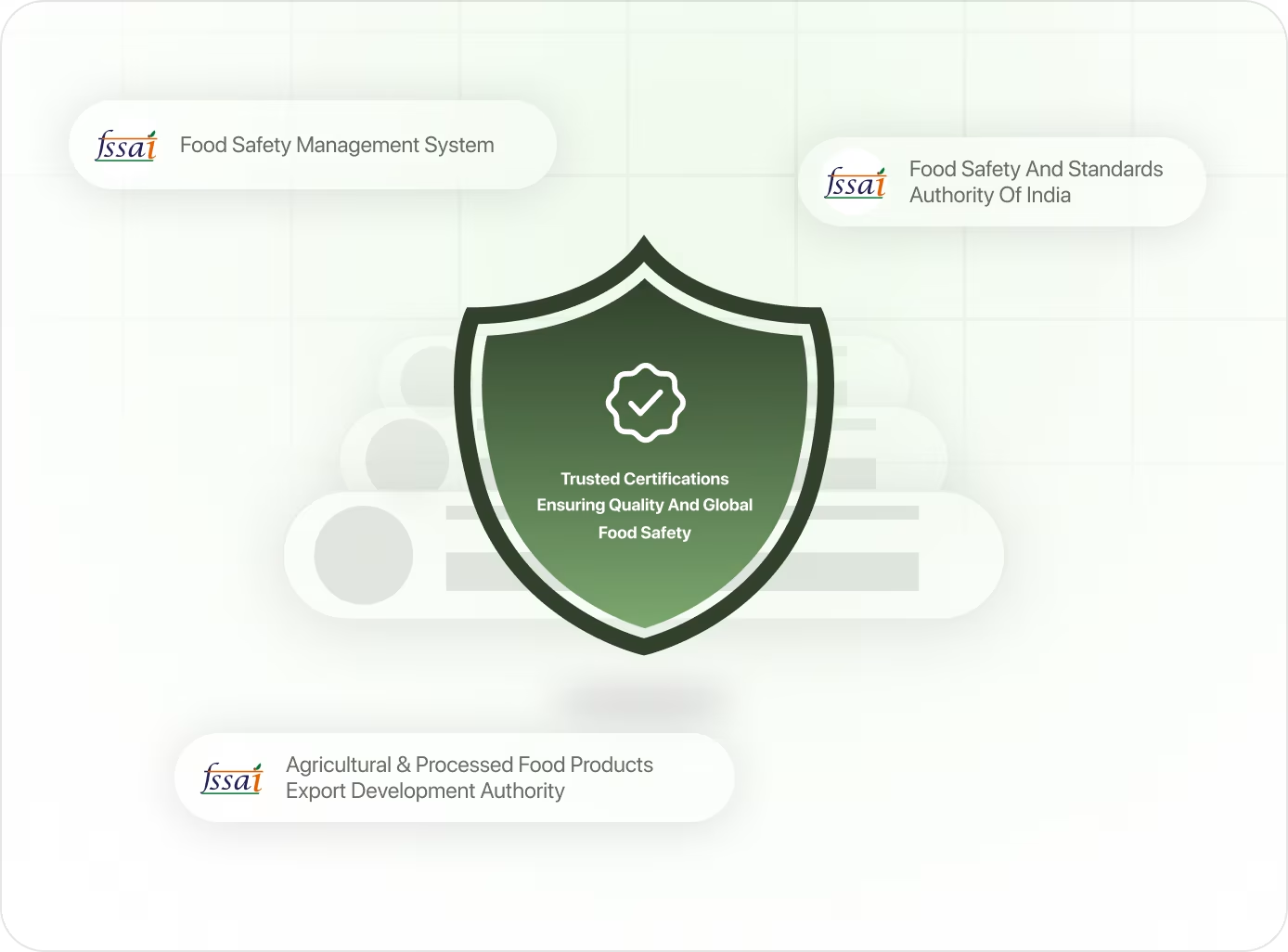
If you have been looking at dehydrated vegetable or spice suppliers from India, you have probably seen the term FSSAI mentioned everywhere. But a lot of international buyers are not entirely sure what it means or why they should care about it. This guide explains what FSSAI certification actually means for food buyers, how it fits with ISO 22000 and APEDA, and what to check before you place an order. For official information, see FSSAI.
What FSSAI Is
FSSAI stands for Food Safety and Standards Authority of India. It is the government body that regulates food safety in the country. Every food business in India that manufactures, processes, or exports food products is required to register with FSSAI. For buyers of onion powder, garlic powder, turmeric, and other products, a supplier's FSSAI registration means they have been vetted for basic hygiene and quality standards, and there is a traceable record of their operations. The registration covers the facility and the products they handle. When you import from India, your customs authority or your customers may ask for proof that your supplier is FSSAI compliant. Having a current certificate on file avoids delays and supports your own due diligence.
FSSAI vs ISO 22000
FSSAI is mandatory registration with the Indian food safety authority. ISO 22000 is an international food safety management system standard. They work together. FSSAI says the business is registered and subject to Indian food law. ISO 22000 says the business has a documented system for managing food safety from raw material to finished product. Many buyers in the EU, US, and Middle East require both. They want to see that the supplier is not only registered but also operates under a recognised management system. Ask for both certificates when you qualify a new supplier. Check the validity dates and the scope (which products and which facility are covered). Expired or out-of-scope certificates are not useful for your audits or for customs.
Why It Matters for Your Imports
FSSAI works alongside ISO 22000 and HACCP to create a full food safety framework. If you are importing into the EU, the US, or the Middle East, your regulatory bodies will often want to see that your Indian supplier has both FSSAI and ISO 22000 certification. Without these, getting product through customs becomes much harder, and the risk of a failed inspection goes up significantly. Always ask for current certificates and recent lab reports before you place a bulk order. Keep copies on file so you can respond quickly if your customer or an auditor asks for proof. Many food manufacturers and distributors have a supplier approval process that includes verification of FSSAI and ISO 22000. Having the certificates and knowing what they mean helps you pass that process and maintain your supply chain. See our certifications to understand what proper documentation looks like.
APEDA and Export Eligibility
APEDA (Agricultural and Processed Food Products Export Development Authority) is another registration that matters for Indian agricultural exports. It covers export eligibility and documentation for specified products including fruits and vegetables (fresh and processed) and spices. An APEDA-registered exporter can obtain the certificates and clearances needed for export. For you as an importer, buying from a supplier who has FSSAI, ISO 22000, and APEDA registration means you are dealing with an entity that is set up for legitimate, compliant export. They can provide the paperwork your customs broker and your market require. Do not assume that FSSAI alone is enough. For export of dehydrated vegetables and spices, APEDA registration is typically required. Ask your supplier for proof of all three where applicable.
What to Ask Your Supplier
When you are evaluating a supplier, ask for current FSSAI registration, ISO 22000 certificate, and APEDA registration (if they export agri products). Request copies of the certificates and check the validity dates and scope. Ask for recent lab reports (Certificate of Analysis) for the products you are interested in. If a supplier hesitates to share these or cannot provide current certificates, that is a red flag. Reliable exporters keep their certifications up to date and are happy to share them. They know that buyers in regulated markets need this for their own compliance. At Geminate International we are FSSAI and ISO 22000 certified and APEDA registered. We supply dehydrated vegetables and spices to 25+ countries with full documentation every time. Contact us for a quote or to request certificates and a sample.
How FSSAI Supports Your Imports
When you import dehydrated vegetables or spices from India, your customs authority or your customers may ask for proof that your supplier is FSSAI compliant. Having a current certificate on file avoids delays and supports your own due diligence. FSSAI registration means the facility has been vetted for basic hygiene and quality standards and there is a traceable record of operations. For buyers in the EU, US, UAE, and Australia, FSSAI and ISO 22000 together show that the supplier is registered and operates under a recognised food safety system. Many food manufacturers have a supplier approval process that includes verification of these certificates. See our certifications to understand what proper documentation looks like.
Scope and Validity: What to Check
Certificates have validity dates and a scope that states which products and which facility are covered. Expired or out-of-scope certificates are not useful for your audits or for customs. When you request FSSAI and ISO 22000 from your supplier, check that the validity date is current and that the product you are buying (e.g. onion powder, garlic powder, tomato powder, turmeric) is within scope. If you are importing into a regulated market, keep copies on file so you can respond quickly to requests from your customer or authority. At Geminate International we keep our certifications current and can provide them when you place an order. We supply dehydrated onion, dehydrated garlic, dehydrated tomato, and dehydrated ginger to 25+ countries. Why choose us for reliability.
When Certificates Expire or Change
FSSAI and ISO 22000 certificates are renewed periodically. When you qualify a supplier, ask when their certificates expire and whether they have already started the renewal process. A gap in certification can affect your ability to import or to pass a customer audit. Reliable exporters renew before expiry and can provide updated certificates as soon as they are issued. If your supplier's certificate expires before your shipment sails, request the new certificate and keep it on file. At Geminate International we maintain current certifications and notify key customers when renewals are complete. See our certifications.
Our Certifications
Geminate International is FSSAI and ISO 22000 certified. We supply dehydrated vegetables and spices to buyers in over 25 countries and provide full documentation with every shipment. Have a look at our certifications or contact us if you have questions or want a quote. Every shipment we send includes Commercial Invoice, Packing List, Bill of Lading, and Certificate of Analysis. We respond within 24 hours and can provide current FSSAI and ISO 22000 certificates when you place an order. For dehydrated vegetables and spices from India, working with an FSSAI and ISO certified supplier is the baseline. We meet that baseline and deliver consistent quality to 25+ countries. Request a sample or view our products.
Next Steps for Buyers
When you qualify a new Indian supplier, request current FSSAI, ISO 22000, and APEDA certificates and check validity and scope. Request a sample and Certificate of Analysis for the products you intend to buy. Test the sample in your application and confirm the COA matches your specs. Once satisfied, place your order and ensure you receive full documentation with the shipment. At Geminate International we provide all of this with every order. Contact us for a quote or to request certificates and a sample. We respond within 24 hours.
FSSAI and Your Supplier Approval Process
Many food manufacturers have a supplier approval process that includes verification of FSSAI and ISO 22000. Having the certificates and knowing what they mean helps you pass that process and maintain your supply chain. Keep copies on file so you can respond quickly if your customer or an auditor asks for proof. At Geminate International we keep our certifications current and can provide them when you place an order. See our certifications and contact us. We respond within 24 hours.
Requesting Certificates and a Sample
When you qualify a new Indian supplier, request current FSSAI, ISO 22000, and APEDA certificates and check validity and scope. Request a sample and Certificate of Analysis for the products you intend to buy. Test the sample in your application and confirm the COA matches your specs. At Geminate International we provide certificates and samples when you contact us. Request a sample or contact us for a quote. We respond within 24 hours.
Keep copies of FSSAI and ISO 22000 certificates on file so you can respond quickly to requests from your customer or an auditor. At Geminate International we keep our certifications current and can provide them when you place an order. See our certifications and contact us. We respond within 24 hours.